

Four Decades After the CIA’s Warning, Trump’s Iran War Is Playing Out Exactly as Predicted
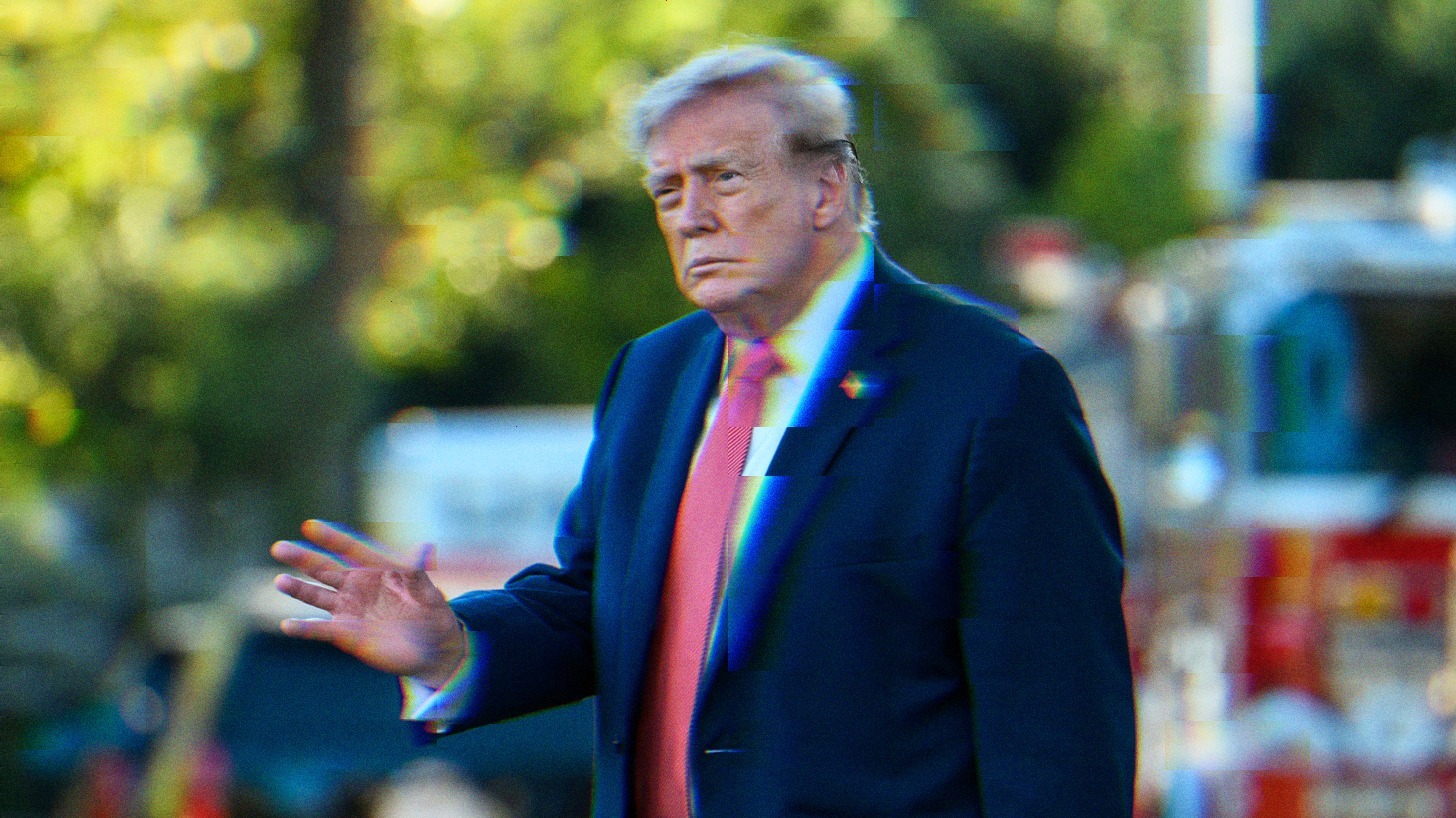 Image Description: Donald Trump walking, and slightly waving. He is not smiling.
This essay appeared in the Oct. 15, 2026 edition of UNFTR’s premium newsletter. Become a UNFTR member to receive our bonus newsletter each week and for other perks.
The warning from the CIA’s special intelligence assessment couldn’t be more sobering: Iran has the wherewithal to inflict significant damage on neighboring Gulf states, send shockwaves through the energy markets by cutting off the Strait of Hormuz and cause serious headaches for the United States, the hegemonic power on which Iran’s regional foes disproportionately rely for protection.
That assessment was delivered in October 1983.
More than four decades later, those warnings, which first became public in 2019, lay bare how President Trump’s war of choice against Iran, waged on Israel’s behalf, remains among the most foolhardy and consequential military actions in decades.
Since the war broke out on Feb. 28—the same day the Trump administration killed more than 120 children—Iran’s goals have only become more audacious as it taunts regional foes and seeks to stake its claim as the region’s true power, even as its economy suffers under the weight of an increased sanction regime.
Meanwhile, the United States has suffered incalculable losses. More than 20 service members have been killed and dozens more injured, and the economic cost has become so omnipresent that it will likely prove disastrous for Trump’s GOP in November’s midterms, to say nothing of the strategic losses that continue to undermine U.S. credibility in the region.
The past can be a harbinger of things to come, and in this case, the assessment was eerily prophetic on several points. The analysis came amid the Iran-Iraq war and warned explicitly that, “Given Iran’s capabilities, these are the most likely [responses]: Attack Kuwaiti oil facilities. Harass shipping in the Gulf or the Strait of Hormuz. Strike the oil facilities of Saudi Arabia, the United Arab Emirates, Qatar, or Bahrain. Close the Strait of Hormuz by mining or blockade.”
The extent to which the 1983 assessment resembles today’s events is striking.
Iran has targeted each of the major Gulf states the decades-old analysis referenced. All told, a Reuters investigation (where we first learned of the 1983 assessment) identified at least 135 drone and missile strikes on 84 known infrastructure sites in the Gulf since the outset of the war.
More than anything, the continued attacks are hitting Gulf states where it hurts most: their economies.
Among the most damaging were the strikes on Saudi Arabia’s crucial East-West pipeline, which the kingdom was forced to take offline, and the bombing of Qatar’s Ras Laffan LNG, the country’s largest gas facility, which killed at least 13 people and ignited a major explosion.
As a result of Iran’s actions since the war began, Brent crude is up nearly 69 percent from a year ago, and the energy crisis may only deepen with winter approaching, forcing a panicked Trump to strike deals with Russia to get more diesel flowing.
Again, Trump need only look to his government’s own intelligence agency to assess what Iranian retaliation would look like.
Among the other relevant findings from the 1983 analysis:
- “Iran has some capability to initiate any of these actions and even a few attacks against well-chosen targets could do considerable damage to Gulf oil facilities.”
- “Severe damage to the main Saudi facilities or closure of the Strait of Hormuz, however, would create a worldwide oil shortage and push up oil prices substantially.”
- “Denial of all or most of the source of supply for a substantial period of time would create a worldwide oil shortfall much greater than that in 1973 or 1979. The United States could not insulate itself from the disruption of the world oil market.”
It was all right there. Yet Iran’s strategy of attacking energy infrastructure, among other targets, reportedly caught the Trump administration flat-footed.
CNN reported in March that the Pentagon and National Security Council “significantly underestimated Iran’s willingness to close the Strait of Hormuz,” and Trump himself claimed officials didn’t foresee Iran retaliating against Gulf nations.
“Nobody expected that,” he said. “We were shocked.” (That characterization was later disputed by administration officials who insisted they were aware of such a possibility.)
Besides having to confront a targeted assault on its allies, the United States has watched the war reignite the civil war in Yemen, in which Saudi Arabia has long been a major player and the country’s crown prince, Mohammed bin Salman, a reported “mastermind.” That war, which began when the Houthi rebels took over Yemen’s capital, Sanaa, in 2014, spawned one of the world’s largest humanitarian crises. Human rights groups report that an estimated 22 million people in Yemen require humanitarian assistance, and more than 5 million remain internally displaced.
Recent fighting has obliterated a fragile ceasefire that had been in place since 2022. Even before the U.S.-Iran war, the Houthis traded strikes with the American forces, first during the genocide in Gaza in 2024, when Biden was in charge, and again in 2025, with Trump in the Oval Office. Remarkably, Trump praised the Houthis (“They had a great capacity to withstand punishment”) when announcing a ceasefire in May 2025.
But the war with Iran seemed to change the calculus. In their most dramatic military assault yet, the Houthis shocked the region last week when they successfully struck an airport in Riyadh, Saudi Arabia, killing at least 13 people and injuring more than 300. Perhaps in a sign of how weakened the kingdom is, the Associated Press reported that Saudi Arabia is low on interceptors, potentially exposing it to more strikes.
Faced with the threat of escalating hostilities, Mohammed bin Salman has reportedly urged Trump to intervene more than once, something the president has yet to do. (He has also requested military support from Pakistan, France, the UK and Egypt). There may be a very simple reason for the bellicose Trump to be gun-shy: As the war with Iran has dragged on, CNN reported in August, the United States has similarly exhausted many of its own critical interceptors.
At the same time, the Houthis continue to make gains. In just the last few months, they have seized two Red Sea islands, expanded control of another crucial trade route, the Bab al-Mandab Strait after claiming the island of Perim, and hit an Aramco facility in Saudi Arabia, and vowed to target other sites if Yemen’s oil facilities are attacked.
It’s clear the Trump administration has limited ability to protect its so-called allies. Reuters reported as much in its investigation into infrastructure attacks across the Gulf states, writing, “For Kuwait, as with the UAE, having a US military presence and advanced American weaponry weren’t enough to stop the attacks.”
Meanwhile, everything is spiraling out of control. Trump has no good answers for the hole he’s dug for us all. It’s no wonder he is considering dropping the so-called Mother of All Bombs on Iranian energy sites, which would escalate tensions and likely fail to provide the United States any strategic value (other than a spectacular show of force for the purposes of war porn).
Alas, this could have all been avoided.
“The Gulf Arabs, in our judgment, are unlikely to challenge Iran except when directly attacked. Otherwise the Gulf states would attempt strenuously to avoid hostilities and look to the West to remove the Iranian threat,” CIA officials wrote in the 1983 assessment. “They all recognize that Iran is capable of causing them long-term security problems and they would strongly prefer to avoid actions that might give the Iranians cause for future retaliation.”
Good to know.
Image Source
- The White House, Public domain, via Wikimedia Commons. Changes were made.
 Rashed Mian
 is the managing editor of the award-winning News Beat podcast and co-founder of the newly launched Free The Press (FTP) Substack newsletter. Throughout his career, he has reported on a wide range of issues, with a particular focus on civil liberties, systemic injustice and U.S. hegemony. You can find Rashed on X @rashedmian and on Bluesky @rashedmian.bsky.social.


