
The Art of Trumpflation.
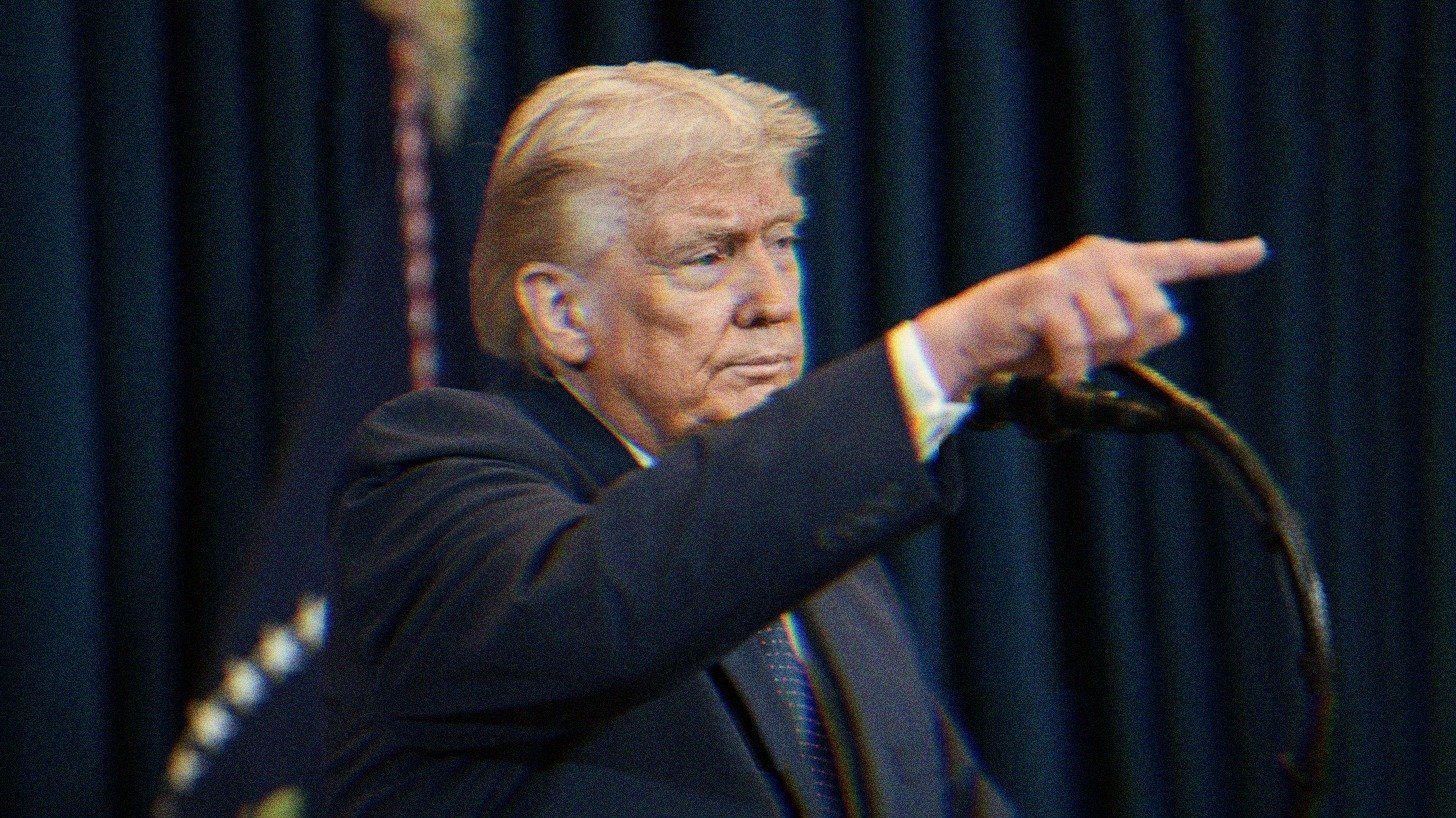 Image Description: Trump speaking at a podium and pointing.
The February Producer Price Index (PPI) data release came in way hotter than expected, exceeding consensus expectations by nearly double. This is on top of an already hot January report, which signifies that goods and services inflation in the pipeline is very much a trend and not an isolated event. PPI typically foreshadows consumer inflation—where the public really begins to feel the pain—by about two to three months. And these numbers don’t include the impact of the war in Iran and the unbelievable spike in energy costs. Today we break down the nature of inflation shocks, why this differs from the dual oil shocks of the 1970s, but how it has already produced the same stagflationary result.
The self-inflicted wounds are piling up. And as much as we’ve already been paying the price—literally, in the form of tariff inflation that the administration insists doesn’t exist, and in the creeping cost of core goods and services like food, healthcare, and electricity—we are about to pay a whole lot more.
We recently walked through the Producer Price Index (PPI) data that came in hot at the top of the year. For those new to UNFTR, PPI is the upstream inflation gauge—it measures what businesses pay to produce goods and services before they reach the shopping cart or final bill. Think of it as inflation in the pipeline. It doesn’t hit you at the register today. It hits you two to four months down the road, after the wholesalers mark up their margins, the distributors take their cut, and the retailer slaps on a profit. The PPI is the canary. The Consumer Price Index (CPI) is when the canary is already dead.
Well, this week the February PPI just dropped. And we are in serious trouble.
Headline producer prices rose 0.7% in a single month. (The estimate was 0.3%.) We more than doubled consensus expectations. On an annual basis, the headline rate jumped from 2.9% to 3.4%—the highest in a year, and way above forecasts that it would hold flat.
Core PPI, which strips out food and energy, came in at 3.9% year-over-year. Goods prices surged 1.1% in one month, the steepest single-month climb since August of 2023.
Keep in mind, this data is backward-looking. It reflects prices in the economy before the Iran war and before oil blew past a hundred dollars a barrel. We’re looking at the worst PPI in a year, and it doesn’t even include the energy price shock that’s now ripping through the system in real time.
It’s important to talk about the nature of inflation. What it is, what drives it, and how the character of today’s inflation differs from the 1970s comparisons you’re about to hear nonstop for the rest of 2026. Most importantly, it’s imperative to understand how inflation is the heavyweight champion of economic threats because it reveals everything wrong with an economy. There’s simply nowhere to hide when inflation comes knocking.
Hardly Transitory
For the last couple of years, the working theory in official circles was that the post-COVID inflation spike was transitory—a temporary supply-chain snarl, a one-time shock that would self-correct as the economy normalized. The Fed was hoping for it. Trump officials were insisting on it. The Treasury was modeling for it.
That theory is now dead.
The Fed’s preferred inflation gauge is the Personal Consumption Expenditures (PCE) and it has been moving in the wrong direction since May of last year. Core PCE hit 3.1% in January, the worst reading in nearly two years. Core services PCE, which accounts for roughly 60% of the entire index, is running at 3.4% annually and accelerating. The Fed’s target is 2%. We haven’t been at 2% in half a decade.
And here’s where the CPI-versus-PCE sleight of hand becomes important. The Consumer Price Index (CPI)—the number the news leads with—has actually been cooling slightly, coming in around 2.4 to 2.5%. So the headline sounds manageable. The problem is that CPI is being suppressed in part by its housing components, which were methodologically massaged downward for three months during last fall’s government shutdown, and which carry twice the weight in CPI as they do in PCE. Energy price declines earlier in the year also masked what was happening underneath.
Strip away those masks, and the underlying inflation story has been getting a lot worse.
Now layer in tariffs. Core goods prices were up nearly 10% on imports last year, and for the most part, American businesses ate the cost rather than pass it on. The pre-tariff inventory buffers that protected consumers are running out. Morningstar estimates that durable goods prices will rise a cumulative 4.5% over 2025–2027, and non-durables—apparel, food, paper products, textiles—by 5.6%. That’s structural.
One of the central themes of UNFTR is that we have been in a Main Street recession since 2008. Real economic growth never filtered down to middle and lower income households in the form of meaningful wage gains. It’s notable that pandemic-era savings gave working and middle-class families a brief cushion, but the post-COVID inflation wave, which was largely driven by corporate greed and price gouging, burned through those savings faster than almost any other period in modern American economic history.
By the time inflation was finally cooling toward the Fed’s target and real wages were starting to recover, the Trump administration’s tariff regime reignited the price environment. Inflation, for the working majority of this country, was never really over. And now it’s a feature of this administration’s economic policy. And it looks like it’s sticking around.
That ‘70s Show
You’re going to hear the word “stagflation” approximately ten thousand times in the months ahead, almost always in reference to the 1970s. So let’s talk about what happened then and how it differs from now, because the character of an inflation shock determines how economies respond to it and how long it lasts.
The 1970s stagflation was a genuine dual shock. First came the 1973 Arab oil embargo. Then the Iranian Revolution in 1979 wiped out another major source of supply. Both events triggered absolute shortages—not just price dislocations, but physical supply interruptions in an era when the United States and much of the West had already peaked in domestic oil production.
A geologist named M. King Hubbert had predicted this back in 1956. His Hubbert curve was a bell-shaped model of oil production over a reserve’s lifespan and it correctly forecast that U.S. continental oil output would peak around 1970. Oil production declined over the next couple of decades and natural gas wasn’t yet a true alternative. Fracking didn’t exist. The Permian Basin hadn’t been unlocked. The country, and the world, was genuinely running tight on supply in a way that made the price shocks feel existential.
The stagflation of that era bewildered Keynesian economists, who had built their models around the Phillips Curve—the idea that you couldn’t have high unemployment and high inflation at the same time. From the Federal Reserve’s perspective, you had to pick your poison: control inflation with tight money and high unemployment, or stimulate growth and accept some inflation. Stagflation broke that tradeoff. Both problems arrived together.
After decades of winning the economic theory battle, Keynesians suddenly had no playbook. And into that vacuum walked the Chicago School—Milton Friedman, Friedrich Hayek, and the monetarist revolution that would become the intellectual backbone of Reaganomics. Cut taxes, deregulate, crush inflation with punishing interest rates, and let markets allocate. The Reagan administration adopted this framework almost wholesale in 1981, and we have been living inside that paradigm ever since.
The stagflation of the 1970s was not just an economic inflection point. It was a political and ideological one that reshaped the entire arc of American economic policy for 50 years.
What’s different today?
Today’s oil shock is not a supply shock in the Hubbert sense. Over the 50 years since peak-oil panic, we have made extraordinary advances. Fracking technology unlocked the Permian and Eagle Ford basins. Offshore deep-water drilling added enormous reserves. Liquefied Natural Gas (LNG) became globally traded and ubiquitous. Hubbert’s original prediction was effectively dead.
So what we’re dealing with now is a price shock, not a supply shortage. When the Strait of Hormuz goes offline—as it functionally has, with tanker traffic stalled, insurance premiums detonating, and Iran controlling the chokepoint—roughly 20 million barrels of oil equivalent per day that normally transit that passage are suddenly at risk. Brent crude has already blown past $106 a barrel, more than 40% above where it was two weeks ago.
But here’s the mechanism that makes this just as damaging as 1973 even without a physical shortage: oil and gas are fungible commodities traded on global exchanges. When prices go up anywhere, they go up everywhere. There is no escape valve.
It starts at the pump. Gasoline prices are already spiking, and every American with a car or a commute feels it immediately and viscerally. That part is obvious. But then the cascade begins.
Trucking costs rise because diesel is a fuel input. Rail shipping, maritime freight, last-mile delivery—all of it re-prices. The cost of transporting every good in the economy goes up, which means the cost of every good in the economy goes up. Agriculture is next. Fertilizers are petrochemical derivatives, and farm equipment runs on diesel. Food prices, already elevated, get a second wind.
Then manufacturing. Energy inputs are embedded in almost every industrial production process. Steel, aluminum, plastics, chemicals. All of them feel the burn. And all of that repricing shows up, with a lag of weeks to months, in the PPI first (and then in the CPI) and then in your grocery bill, your electric bill, your Amazon cart.
That’s exactly why Trump needed this to be a quick war. Not for strategic reasons, for economic ones. Because the longer oil stays at triple digits, the deeper the inflationary wave that follows. And Trump has catastrophically underestimated the Iranians. It was never going to be quick. The Iranians hold the cards on the strait, and they know it. This isn’t a skirmish—it’s an endurance contest, and the American economy is not built for it.
Here’s why economists fear inflation above every other metric. Above unemployment. Above deficit spending. Above interest rates. Inflation is the great leveler. It doesn’t care whether you’re a developing agricultural economy or the most diversified industrial economy in human history. It doesn’t care if you’re Japan, which is almost entirely import-dependent and extraordinarily exposed to commodity price shocks, or the United States, with our trillion-dollar consumer market. Inflation hits everything.
Inflation is sticky. It’s hard to kill without causing enormous collateral damage in the form of job losses and recession. It erodes purchasing power, it punishes savers, it destroys fixed-income budgets for anyone on a pension or a salary. And every time central banks try to tame it aggressively, they break things.
But my biggest concern right now—the boulder sitting on the edge of the cliff—is private credit.
Morgan Stanley dropped a note this week forecasting that default rates in direct lending could reach 8%, nearing COVID-era highs. But other analysts looking at the Business Development Companies (BDC)—the publicly traded vehicles that lend to small and mid-sized businesses—are projecting defaults in certain software-heavy portfolios as high as 13–15%. And the BDC sector has already declined 23%.
Now throw inflation into that picture. Higher input costs squeeze the EBITDA of private credit borrowers who are already leveraged to the hilt. Coverage ratios (the measure of how comfortably a company can service its debt) compress. Defaults accelerate. And then you’re in 2007–2008 territory, where structural parts of the broad economy are quietly collapsing in ways that are invisible to the average person until the first big domino falls publicly.
That domino probably looks like a major bank announcing a significant pullback from private lending. Or one of the large BDCs reporting devastating earnings that triggers a wave of fund redemptions and a run in both the equity and bond markets attached to that sector. The contagion from that is not contained. It spreads, as it always does, through the interconnected tissue of a financial system that nobody has fully mapped.
That is why inflation is the most feared of all economic metrics. Not because it raises prices. But because it is the pin. It finds whatever is over-inflated, over-leveraged, and over-exposed—and it pops it.
Image Source
- The White House, Public domain, via Wikimedia Commons. Changes were made.
 Max
Max
Max is a political commentator and essayist who focuses on the intersection of American socioeconomic theory and politics in the modern era. He is the publisher of UNFTR Media and host of the popular Unf*cking the Republic® podcast and YouTube channel. Prior to founding UNFTR, Max spent fifteen years as a publisher and columnist in the alternative newsweekly industry and a decade in terrestrial radio. Max is also a regular contributor to the MeidasTouch Network where he covers the U.S. economy.