
Inflation, The Fed and What Comes Next.
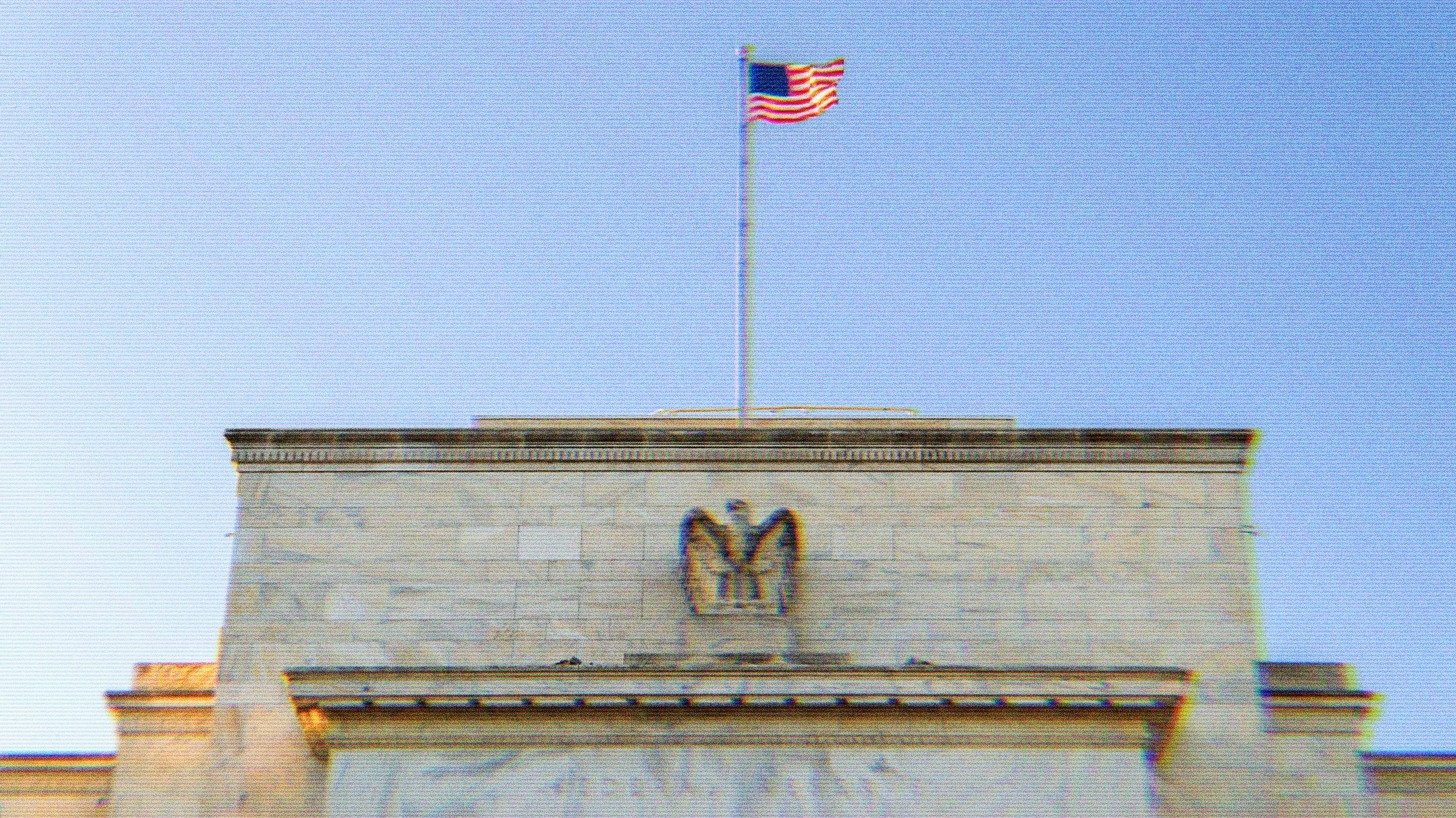 Image Description: The Federal Reserve building. The words ‘Federal Reserve’ are visible, as is an eagle and the American Flag.
Inflation figures came out this week and they were absolutely brutal. April CPI was startling enough, but the Producer Price Index (PPI), which is an indicator of inflation in the pipeline was shocking. Oil reserves are running down to dangerously low levels and it’s clear now that there’s no immediate resolution to the oil crisis, so we’re about to realize our worst economic fears. We take a look back at our predictions from nine months ago to see how accurate they are and to build on them for what comes next. Against the backdrop of this horrible inflation data, we have a new sheriff in town at the Federal Reserve. The man whose job it is to theoretically tame inflation has no tools in the box to deal with this level of crisis. The real question is whether he ever intended to.
Inflation data is off the charts. Both the Consumer Price Index (CPI) and Producer Price Index (PPI) data this week were blistering. But the horrifying aspect of them is that these numbers only capture the first fraction of the Iran conflict. A third of the world’s oil reserves have already been released from strategic stockpiles. Tankers still aren’t moving through the Strait of Hormuz. The supply chain shock that’s driving all of this is deepening. Every minute, of every hour, of every day.
We have officially passed the point of no return on this inflation cycle, and now we have Kevin Warsh as Fed Chair who wants to prescribe the opposite prescription to what we would normally do in this situation. So let’s have a conversation about how all of this is connected—and more importantly, what comes next.
Almost nine months ago I put out a list of predictions. And I want to revisit five of them right now—not as a flex, but to demonstrate something important: autocratic rule is totally predictable.
Ready?
- A war will break out somewhere on the planet that requires our attention, because our policies or interventions will have been partially if not wholly responsible.
- Inflation and job losses will enter a vicious cycle—first pressuring the long end of the yield curve, then the short end—causing the deficit to balloon beyond projections.
- The Federal Reserve will prop up overnight settlement markets with startling frequency, which will ripple through the global economy as official and unofficial sources seek safe havens elsewhere.
- The government will have no other choice but to intervene once again in the financial markets that begin to collapse under the weight of margin calls and leverage.
- Those at the top end of the economic ladder will insulate themselves by funneling money into the mattress, speculative assets, and short positions—taking as many gains on the way down as they have on the way up.
- Their grip over central banking activities and the political process will tighten.
The first three are upon us. The next three are not speculation; they are the only logical next steps. And by the end of this conversation, I think you’ll see why.
If you caught our piece on ten important economic terms for our times, high on that list was fiscal dominance. Quick refresher because it’s the lens for everything we’re about to discuss.
Fiscal dominance is when a government’s debt and deficit become so large that they neutralize the normal tools of monetary policy. In a so-called normal environment, the Federal Reserve raises interest rates to cool an overheating economy—higher rates make borrowing more expensive, people save instead of spend, things slow down. Cut rates, the reverse happens. Blah blah blah. Econ 101.
Under fiscal dominance, that mechanism breaks. Because the other forces influencing market rates—the sheer size of U.S. debt, the deficit trajectory, the risk premium the market charges to hold our bonds—are bigger and more powerful than whatever the Fed does with its overnight rate. The Fed controls one narrow sliver of the rate environment. The market controls everything else. And right now, the market has made its verdict: the United States, under current management, is a credit risk.
So…This whole idea that Kevin Warsh is going to waltz into the Fed, wave a magic wand, and bring rates down? It is ridiculous. And it’s ridiculous for two reasons.
First: he doesn’t have the votes. The Federal Open Market Committee (FOMC) has 12 voting members. Warsh would need 11 of them to agree. Second: even if he could snap his fingers—it wouldn’t matter, because auto loans and mortgages aren’t tethered to the federal funds rate. They move with the 10-Year Treasury. Moreover, the 10-Year isn’t going anywhere useful anytime soon because the market is pricing in a risk premium.
And then there’s Scott Bessent. Treasury Secretary Bessent is positively fucked. His entire job is to keep U.S. debt cheap and desirable. To make sure foreign governments and sovereign funds keep buying our Treasuries. And his boss is torching the credibility of the United States on the global stage, dollar by dollar, tariff by tariff, tweet by tweet.
I’ll give you an example. You may have heard about the Treasury opening swap lines to the UAE during this crisis. Some people read that as an act of generosity. Let me be clear: the UAE doesn’t need our money. They have more money than—as my mom used to say—“Carters has pills.” Those swap lines are not for them. They’re for us. It’s Bessent desperately trying to keep global demand for the dollar from cratering because the dollar is losing its appeal and the Treasury is losing control of the debt market.
Hold all of that. Because it connects directly to what we’re going to talk about at the end.
The Data
Okay. Two data releases in two days. Both alarming. Let’s go through them.
CPI. Consumer prices rose 3.8% year over year in April. That’s the hottest reading since May 2023. In March it was 3.3%. In February it was 3.0%. This is acceleration.
Energy up 18% annually. Gasoline specifically up 28% from a year ago—and nearly 28% over just the last two months. Fuel oil up 54% year over year. Groceries up 0.7% in a single month—the biggest jump in four years. Just as important to the inflation narrative is that real wages fell 0.3% year over year—the first annual decline in three years.
Now here’s the comparison to think about. This rivals the worst months of what the media called “Biden’s inflation problem.” The surface headline numbers look similar. But the causes are different in an important way.
Under the post-COVID inflation spike, two things were happening. Supply chains were genuinely snarled by a once-in-a-century global shutdown. And corporations were exploiting the hell out of it. Matt Stoller, the Groundwork Collaborative, researchers across the board documented this. Corporate profits accounted for anywhere between 40 and 50% of price increases from 2020 through 2022. Companies saw consumers flush with stimulus cash and said, “great, we’ll take that.” CEOs were literally on earnings calls bragging about “taking price.”
This time, the supply chain shock isn’t a respiratory virus, it’s a human one named Trump. He shut down the global economy. He’s the one who snarled the supply chains. The Iran war, the Strait of Hormuz closure, the tariff uncertainty—all of it traces back to the same reckless foreign and economic policy. Different crisis, same outcome: a broken supply chain feeding prices higher.
And the corporate greed is still there, it’s just taken a different form. This time the consumer is tapped out and corporations know it. So instead of gouging the consumer directly, they’re taking the massive liquidity from prior earnings, the tax cuts, the advantageous depreciation schedules and lighter regulatory burden, and they’re using it to buy back their own stock. Russell 3000 buyback authorizations are already up 36% year over year. U.S. companies are on track to repurchase close to a trillion dollars in shares this year. That money goes to shareholders instead of wages. It doesn’t circulate in the economy. It removes capital from the system while workers absorb the inflation.
And then we had the Producer Price Index, and it was genuinely panic inducing.
PPI measures wholesale prices—what it costs businesses to produce goods and services before they sell them to you. Think of it as the pressure gauge upstream. When PPI is hot, CPI follows in roughly 60 to 75 days. What’s in the pipeline today is in your grocery bill and your utility statement in two months.
April PPI came in up 1.4% in a single month, the largest monthly jump since March 2022. Year over year, final demand prices rose 6.0%, which was the biggest 12-month increase since December 2022. Goods prices were up 2.0% in the month driven by a 7.8% spike in energy at the wholesale level.
Now here’s the thing about the timing. CPI for April captured January through April of the Iran conflict. PPI for April does the same. The Strait of Hormuz has been functionally closed since late March. The full shock is still working its way through the production and shipping system. The numbers we’re seeing now are the leading edge. The bulk of the pass-through is still coming.
So if you’re with me on predictions one through three—and the data is doing a pretty good job of making the case—let’s talk about four, five, and six. Because I think they’re closer than most people want to admit.
Government will intervene in financial markets.
Kevin Warsh said he wants to cut rates and shrink the Fed’s balance sheet. He’s not going to cut rates, because the FOMC won’t follow him. That’s important. There is absolutely no way he shrinks the balance sheet because when the debt markets start to buckle under the weight of what’s coming, the Fed will have no choice but to step in. The Fed is the buyer of last resort. When the Treasury can’t find enough willing buyers for its debt at sustainable rates, the Fed monetizes it.
We saw it in 2020. We saw the early tremors of it in the repo market chaos of 2019. We’ll see it again soon. The Fed will have no other choice but to expand its balance sheet within the next few months to absorb the cascading shocks in the debt market. And when that happens, the “shrink the balance sheet” promise evaporates. Just like every other promise from this administration.
The wealthy move to short positions and cash.
To the extent that sophisticated investors can time markets—and they can, more than the rest of us—the investor class is already starting to hedge to the downside. There’s simply too much risk in the air.
Normally in uncertain times, money parks in value stocks and real estate. But a correction right now is likely to be broad, even if it’s temporary. And real estate is a trap—mortgage rates are brutal, transaction volume is frozen, and prices haven’t corrected to match the rate environment. So the smart money, at least in the short term, moves to cash. Which means losing real purchasing power to inflation. But it’s still the best bet on the table when everything else is burning.
And here’s why that matters for the rest of us: capital moving to cash is capital leaving circulation. It’s not investing in businesses, not creating jobs, not funding expansion. It’s sitting on the sideline, waiting for the fire to stop. That is contractionary. That is deflationary for asset prices and simultaneously inflationary for goods and services because productive investment dries up. It is the worst of both worlds for working people.
The grip on central banking tightens.
And this is the one you need to pay attention to.
I told you to hold the Warsh question. Here’s why. In March 2024, our Fed governor buddy Stephen Miran—who we once thought would be the Fed chair—co-authored a white paper for the Manhattan Institute with Dan Katz, who is now chief of staff at Treasury. The paper was a blueprint for overhauling the Federal Reserve. Completely.
The proposals included:
- Giving the president at-will power to fire Fed board members and regional bank presidents.
- Handing Congress control over the Fed’s operating budget through the standard appropriations process.
- Shortening the 14-year terms of governors—the very terms designed to insulate them from political cycles.
- And restructuring the FOMC so that all 12 regional bank presidents vote at every meeting, instead of the current rotating system—a change that would, as JPMorgan put it, “materially increase the influence of the president over U.S. monetary and regulatory policy.”
You might be thinking: none of that can possibly happen, because Congress would have to amend the Federal Reserve Act. Democrats would filibuster and Republicans wouldn’t blow up the filibuster for this.
But, again…these people write things down. Project 2025. The Mar-a-Lago Accord. The Miran-Katz paper. These aren’t fringe documents. They are operational blueprints that were written in search of a crisis that would make them actionable.
Here’s the play. We are in a crisis. Inflation is ripping. Energy prices are exploding. The markets are stressed.
And what has Trump been screaming about for years? Lower rates. The Fed won’t cut. So Trump gets to stand in front of cameras and say: the Federal Reserve is broken. It’s acting against the interests of the American people. It needs to be brought to heel. You know—because he, and he alone, can fix it.
He then directs Thune and Johnson to build legislation around the Miran-Katz framework—which already exists, fully fleshed out, ready to go. And you have Kevin Warsh on the inside, creating what CNBC called a “regime change” agenda and publicly welcoming a “good family fight” with the institution he just joined. He doesn’t need to win the rate vote. He needs to be seen as losing it. Because every time the FOMC blocks him, Trump gets another news cycle of the Fed standing in the way of relief.
This is the setup. The crisis is the pretext. Warsh is the inside man. Miran and Katz wrote the script. Johnson carries the legislation. And the prize isn’t lower interest rates. The prize is putting the interest rate decision—and the bailout decision—under the sole purview of the executive branch. Permanently.
Just as Project 2025 described dismantling agencies, just like the Mar-a-Lago Accord described restructuring global trade—these guys write it down, manufacture the crisis, and act. If you still doubt that, you are not paying attention to the pattern.
Image Source
- Tony Webster, CC BY 2.0, via Wikimedia Commons. Changes were made.
 Max
Max
Max is a political commentator and essayist who focuses on the intersection of American socioeconomic theory and politics in the modern era. He is the publisher of UNFTR Media and host of the popular Unf*cking the Republic® podcast and YouTube channel. Prior to founding UNFTR, Max spent fifteen years as a publisher and columnist in the alternative newsweekly industry and a decade in terrestrial radio. Max is also a regular contributor to the MeidasTouch Network where he covers the U.S. economy.
%20Annual%20Membership%20Meeting.jpg?width=352&name=Stephen%20Miran%20in%20conversation%20at%20the%202025%20Institute%20of%20International%20Finance%20(IIF)%20Annual%20Membership%20Meeting.jpg)